

Cancer is now one of the leading causes of death worldwide. Unfortunately, most cancers are diagnosed at advanced stages, when treatment options are limited and outcomes are poor. In contrast, detecting cancer early significantly improves the chances of successful treatment—and in many cases, a cure.
Traditional screening methods focus on individual cancers, such as breast or colorectal cancer. Multi-cancer early detection offers a new paradigm: with a single blood draw, multiple high-mortality cancers can be assessed simultaneously, improving detection coverage and clinical efficiency.
If liquid biopsy opens a “green pathway” to the hidden disease signals circulating in body fluids, then circulating cell-free DNA stands as one of the “golden keys” to decoding the mysteries of cancer.
Genecast targets critical unmet needs in cancer early detection with purpose-built solutions. Through independent innovation, Genecast has developed THEMIS, a multi-cancer early detection technology based on whole-genome methylation sequencing of circulating cell-free DNA. By employing a gentle enzymatic conversion method, THEMIS maximizes preservation of cfDNA molecular integrity.
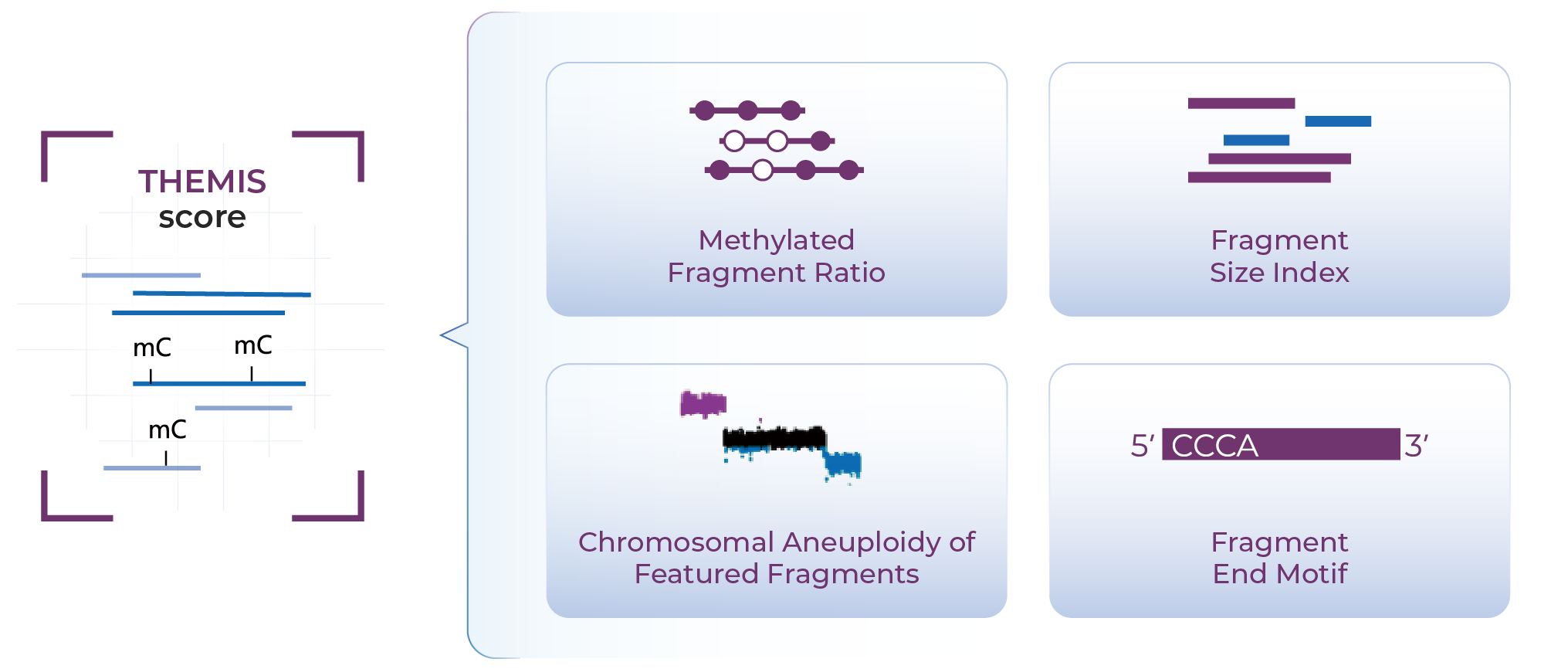
A single test comprehensively captures multi-modal features—including methylation patterns, fragmentomics, copy number variations, and fragment-end motifs. Combined with proprietary biomarker extraction and data integration algorithms, the platform is able to identify subtle early tumor-associated signals within vast and complex datasets, enabling effective cancer early detection.
Requiring only 10 mL of blood, THEMIS is designed for multi-cancer early detection across seven high-incidence cancer types, including lung, colorectal, gastric, liver, breast, esophageal, and pancreatic cancers. Clinical validation in large sample cohorts has shown a 72% sensitivity in Stage I and 81% sensitivity in Stage II disease.
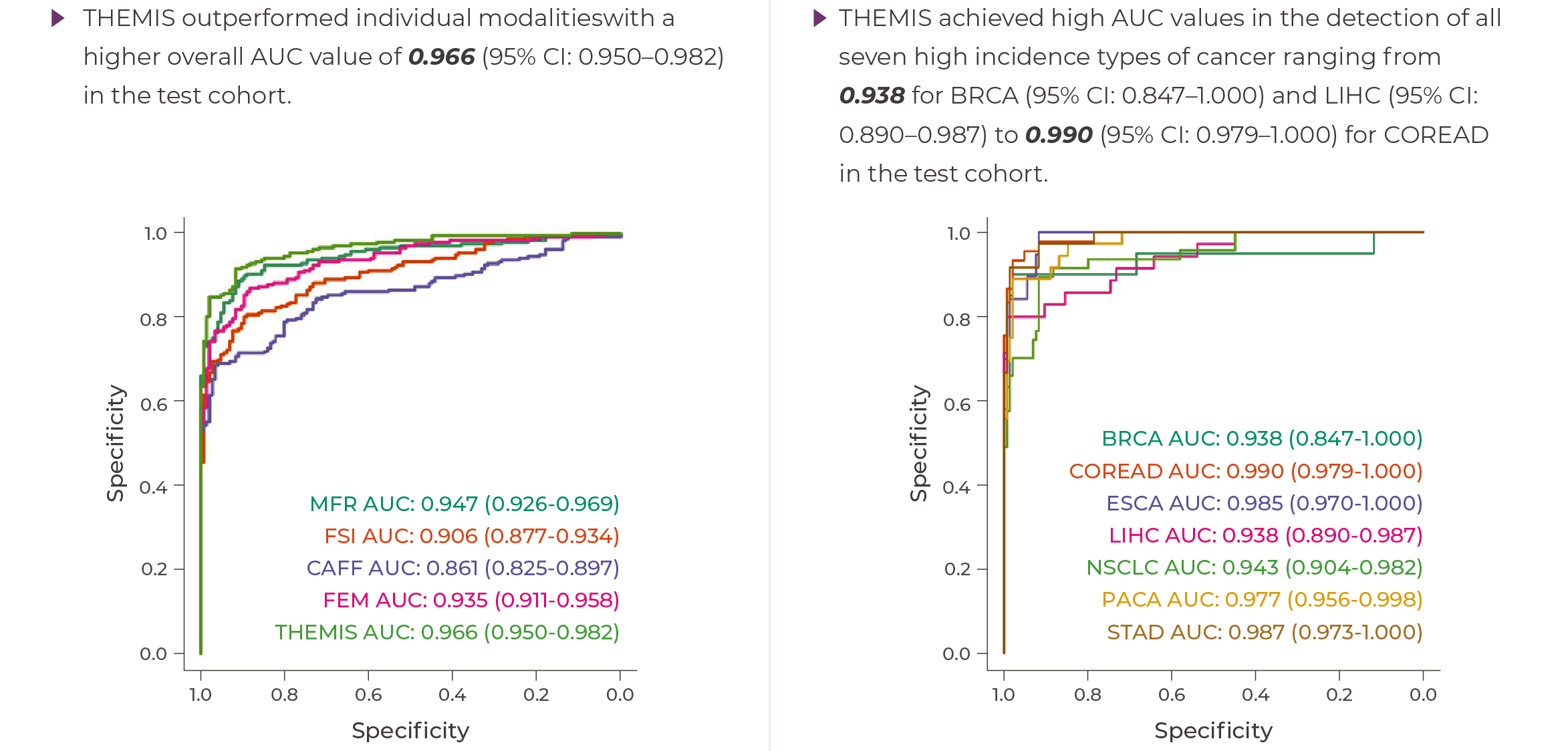
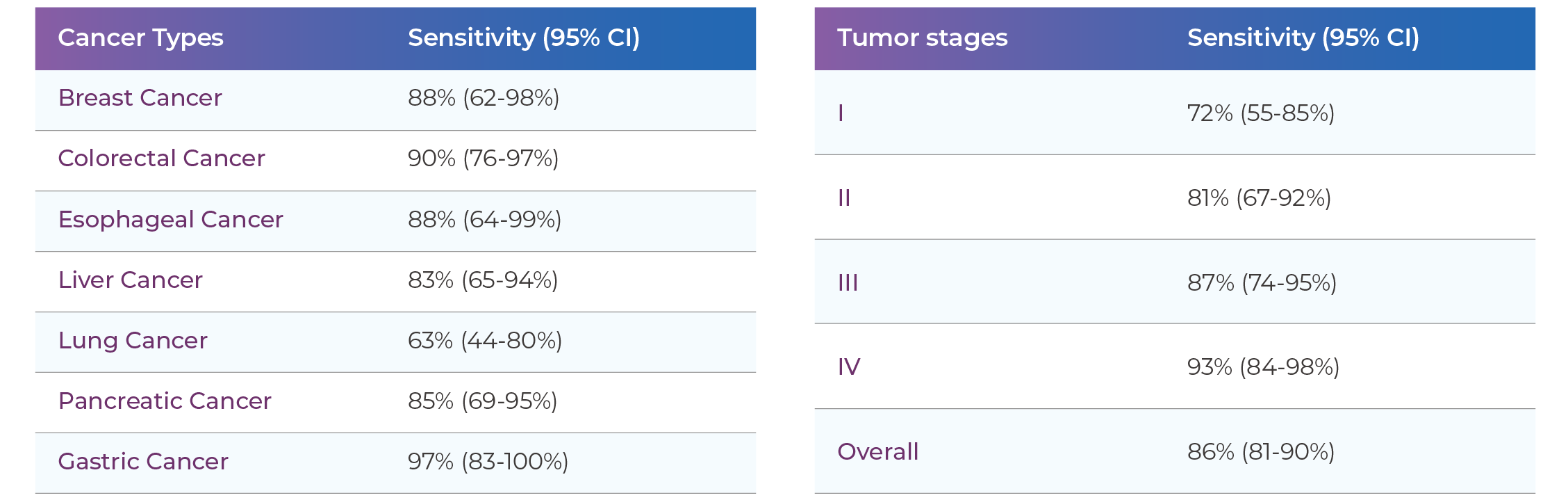
Positioned as a complementary screening tool, THEMIS provides additional avenues for early cancer detection, contributing to improved opportunities for timely diagnosis.
THEMIS is intended for 7 cancer types early detection and risk assessment using cfDNA analysis from a 10 mL peripheral blood sample.
 General Practice
Supports routine health checkups and preliminary cancer risk screening in outpatient settings, without the need for specialized equipment.
 Specialist Care
Assists oncologists and tertiary care specialists in identifying early cancer-associated molecular signals and complements imaging and pathology workflows.
 Individuals and Families
Provides additional information related to personal or familial cancer risk through a minimally invasive blood-based test.
Please provide 1 tube of whole blood, with a volume of 10 mL.TAT will be within 20 working days after sample arrives at Genecast Singapore lab.
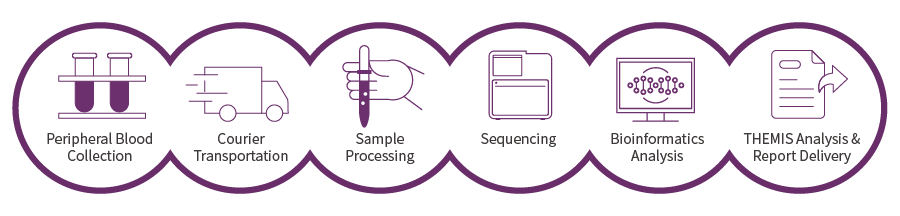
THEMIS (THorough Epigenetic Marker Integration Solution) is a multimodal cfDNA analysis platform for multi-cancer early detection, built on enzyme-based whole-methylome sequencing and ensemble machine-learning modeling.
Unlike conventional bisulfite-based methylation sequencing, THEMIS employs a bisulfite-free enzymatic conversion strategy, enabling genome-wide methylation profiling while preserving cfDNA molecular integrity. This nondestructive approach allows simultaneous extraction of multiple orthogonal cfDNA features from the same sequencing library, including:
Methylated Fragment Ratio for genome-wide epigenetic alterations
Fragment Size Index reflecting cancer-associated fragmentation patterns
Chromosomal Aneuploidy of Featured Fragments for copy number alterations
Fragment End Motifs capturing sequence-specific fragmentation signatures
These four feature modalities are independently modeled and subsequently integrated through an ensemble classifier, leveraging their complementary biological information to enhance signal-to-noise separation between cancer-derived and non-cancer cfDNA. This integrative strategy enables high-specificity detection of low-abundance tumor signals, particularly in early-stage disease.

99% Specificity

83% Overall Sensitivity

7 Cancer Types Covered

Only 10 mL of Blood Required

#02-01/02, The Kendall, 50 Science Park Road. Singapore Science Park 2, Singapore 117406
Tel: +65 6047 0252 ; Email: info@genecast.com.sg
Copyright © 2014-2026 Genecast Group Inc. | Privacy Policy


